Community
Houghton MI
If you’re asking whether Houghton is a buyer’s market or a seller’s market, the honest answer depends more on the property than on the year. Waterfront on Portage Lake and move-in-ready homes near town tend to draw competition, while some rural parcels and older houses take longer to find their … keep reading
What Is the Houghton, MI Real Estate Market Actually Like?
If you’re asking whether Houghton is a buyer’s market or a seller’s market, the honest answer depends more on the property than on the year. Waterfront on Portage Lake and move-in-ready homes near town tend to draw competition, while some rural parcels and older houses take longer to find their buyer. Over the longer run, prices here have generally worked their way up, and Michigan Tech keeps demand steady underneath it all.
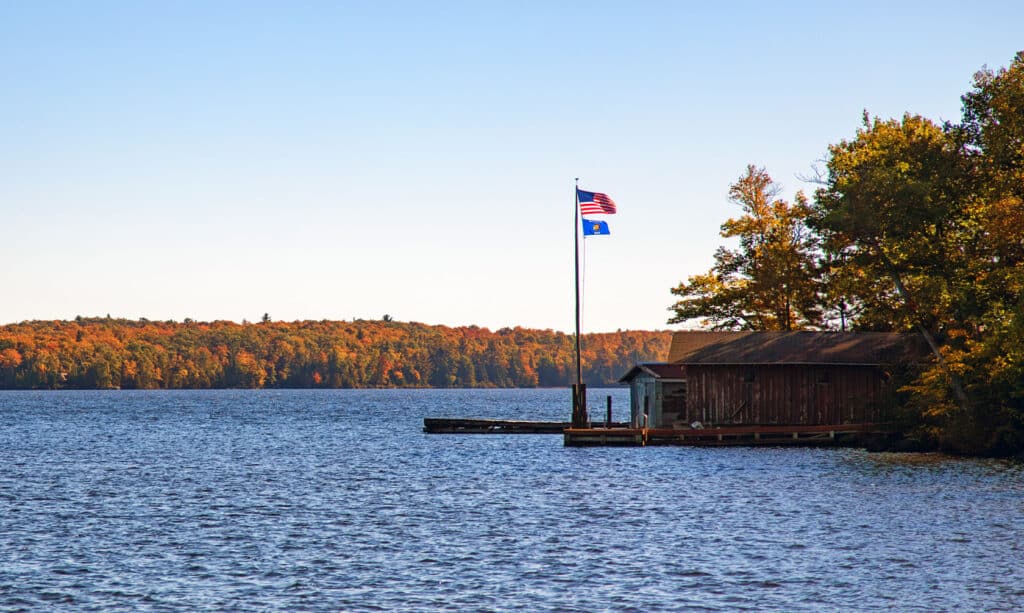
If you’ve been researching from out of state, you’ve probably noticed the numbers online don’t agree with each other, with one site saying Houghton prices are climbing while another says they’re falling. That’s not anyone lying to you; it’s what happens when outside estimates meet a market this small. Transaction data here is thin enough that a single waterfront sale can swing a whole median, and numbers built on data that thin never hold for long.
Over a longer horizon, the direction has been clear. The Federal Housing Finance Agency has tracked a house price index for Houghton County since 1985, and it’s the closest thing this market has to a neutral scorekeeper. It has risen every year since 2021, up roughly 59% across those five years.
It’s an index, not a dollar figure, and it’s built from mortgages backed by Fannie Mae and Freddie Mac, which means cash sales aren’t in it. In a county where a lot of vacant land trades for cash, that’s a real gap, and you should know it’s there before you lean on the line too hard.
Here’s what we’re seeing from inside the office. In one week in the fall of 2025, we heard from an investor around 30 who wanted to buy a 40-foot lot east of L’Anse and flip it, and from a recent Tech grad who had inherited family lots up in Ahmeek and wanted them sold. The third call that week came from a retiree in his mid-80s ready to list a waterfront lot on Portage Entry, with an appraisal in hand and nothing on it but a dock. That’s three generations calling about the same tight market inside of seven days.
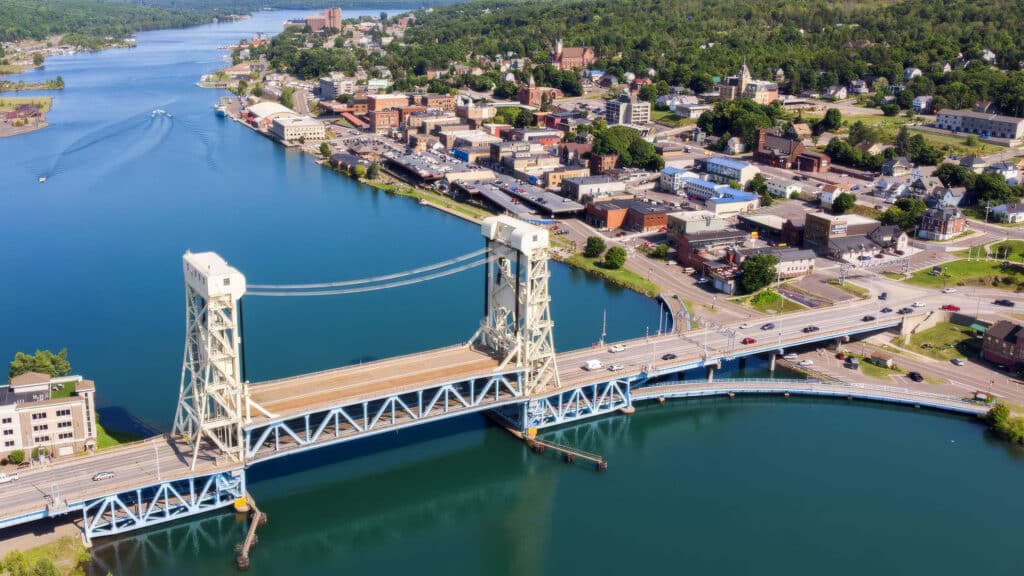
As of August 2026, there are 161 homes and 104 vacant land parcels listed across Houghton County in the UPAR MLS, the system Copper Country deals actually run through. The first thing that number does is settle the question of where to search. Houghton itself accounts for 32 of those homes. Hancock, straight across the lift bridge, has more than the city does at 39. Calumet holds another 32 and Chassell 23, with Lake Linden, Hubbell, Atlantic Mine, South Range, Dollar Bay, Toivola, and Pelkie filling in the rest in ones and handfuls. If your search is limited to the Houghton city limits, you’ve been looking at roughly a fifth of what’s on the market.

The second thing worth noticing is the land: 104 vacant parcels against 161 homes is a much higher ratio than most buyers coming from out of state expect, and in some communities, there’s more land listed than housing. That’s not a quirk of one particular month. Vacant land is a bigger part of this market than the national listing sites make it look, and it’s one of the most common deals we do. If you’ve been hunting for a house and coming up short, the answer up here is sometimes a lot and a builder.
For scale on price, the median asking price across those 161 homes is $274,500, or about $160 per finished square foot. Inside the city of Houghton, the median ask runs higher at $347,500, or $177 per finished square foot. One thing to note is that these are list prices for what’s available today rather than what properties close at, because the two are different numbers and the gap varies by property. What any particular listing is worth is a conversation we’d love to have with you.
(Counts compiled from UPAR MLS community listings for Houghton, Hancock, Calumet, Chassell, Lake Linden, Hubbell, Dollar Bay, South Range, Atlantic Mine, Toivola, Twin Lakes, Nisula, and Pelkie, as of August 6, 2026.)
Where Should You Live in and Around Houghton?
The first real decision isn’t which town. It’s whether you want to be in town or outside it, because that one choice changes what you buy, what you’ll spend to make it livable, and who sets the rules you live under.
In town, city services exist, but existing and being connected aren’t the same thing. You can buy a lot inside the city and still owe connection charges to bring water, sewer, and gas to it. Ask what’s actually run to that specific parcel before you assume the number is zero.
Outside town, you’re building the utilities yourself. A rural parcel usually means installing a septic system and a well, likely running a propane line, and then lining up fiber or cable, phone, and electric on top of that. Plenty of the buyers we work with want exactly that and are glad they did it. It just needs to be priced honestly before you write the offer, not discovered afterward.
The municipal line matters more than it looks on a map. The City of Houghton, the City of Hancock, and each surrounding township set their own rules and keep their own assessor, so your snow-removal duty, your zoning answers, and where your homestead paperwork gets filed all change depending on which side of a line the property sits on. Buy in Chassell Township, and your exemption goes to the Chassell Township assessor, not to the city.
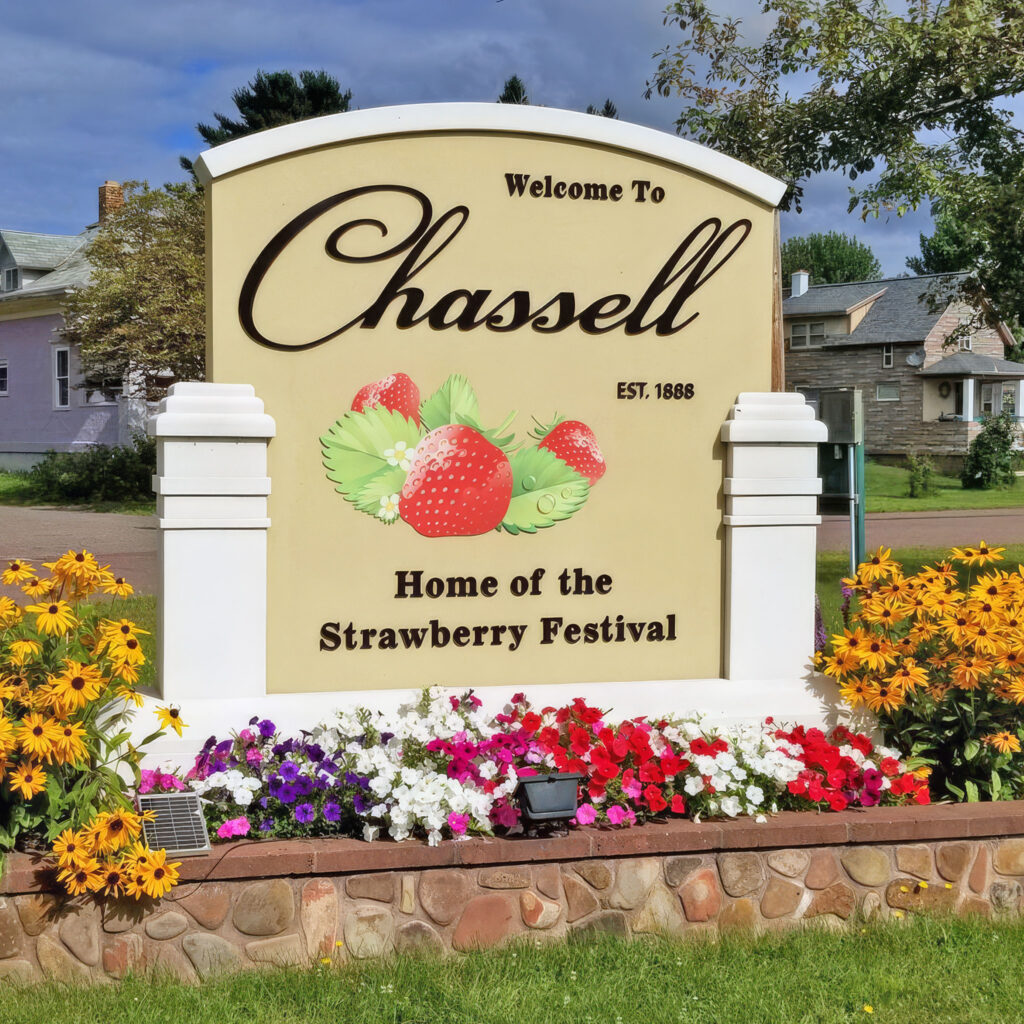
Distance is the last piece, and it’s the one out-of-area buyers get wrong most often. The towns look scattered on a map, but 15 miles up here is a 15-minute drive because nothing is slowing you down. That’s why we tell people to search the whole county rather than the city, and why we work Houghton and Keweenaw counties along with Baraga and Ontonagon. The right property is often one town over from where you started looking.
Two Things Change by Address, and Neither One Shows Up on a Listing Sheet
Schools. A county of 37,000 people supports a surprising number of districts: Houghton-Portage Township, Hancock, Public Schools of CLK, Lake Linden-Hubbell, Chassell Township, Dollar Bay-Tamarack City, Adams Township, Stanton Township, and Elm River Township, plus Copper Island Academy. They range from roughly 1,450 students down to under 200. Michigan’s Schools of Choice program means your address doesn’t automatically lock you into one. Still, participation and grade-level openings are set annually, and Houghton-Portage has run restrictions at several grades. Check the current year before you assume anything.
Zoning. Houghton, Hancock, Calumet, South Range, and townships including Chassell and Portage have zoning ordinances. A number of the surrounding villages and townships have none at all. Whether that’s good news depends entirely on what you’re planning to do, and it’s worth knowing before you buy next to a parcel nobody controls.
Once you know which side of those questions you’re on, the list of places that fit gets short fast. That’s the conversation to have on the phone, because it depends on what you’re doing here.
How Does Michigan Tech Shape Houghton’s Housing Market?
Michigan Tech is the single biggest force in Houghton’s housing market, and it isn’t close. The university pulls a steady stream of students, faculty, staff, and returning alumni into a small town every single year. That steady pull is the main reason demand here never really lets up.
The scale tells you most of the story. Michigan Tech enrolled 7,411 students in the 2025-26 year, per the university’s own count- numbers it hasn’t seen since the early 1980s. It’s also the area’s largest employer, with roughly 1,400 to 1,800 employees, depending on whether you count by recent federal or university reporting. In a town this size, that many students and paychecks tied to one campus means the university sets the rhythm for nearly everything, housing included.

Here’s how that lands on housing: only first-year students are required to live on campus. After that, students are free to move into the same small local market as everyone else, and enough of them do that rental demand stays steady year after year. Steady demand supports property values and keeps inventory tight. The university added beds of its own too, opening East Hall in August 2025, a new residence hall with 512 beds per MTU’s announcement, and you can’t drive onto campus without noticing it.
And we see all of this in who actually calls the office. More than half of the buyers we work with have some connection to Michigan Tech, whether they went to Tech themselves, their kids did, or someone else in the family has the tie. The second-strongest connection we see is plain old family history in the Copper Country.
The most common new buyer calling our office is a Tech grad who left after graduation, built a career elsewhere, and is now coming back because remote work makes it possible. Tech families tend to stay Tech families, too. Michigan Tech’s Alumni Legacy Award gives out-of-state children and grandchildren of alumni the Michigan-resident tuition rate. That kind of deal keeps the next generation looking at Houghton long before their parents start browsing homes for sale. So if your own search started with a Tech connection, you’re not the exception in this market; you’re the buyer we see most often.
What Will You Actually Pay in Property Taxes on a Houghton Home?
Two things about Michigan property taxes surprise almost every buyer who calls us from outside the state. First, whether the home is your principal residence affects the school tax portion of your bill by up to 18 mills. Second, your assessment doesn’t simply reset to whatever you paid for the place. Get those two straight, and the rest of the system starts to make sense.
Start with the value side. Michigan puts a few numbers on every property, and only one of them is what your bill gets calculated on: the taxable value. Running alongside it is the state equalized value, or SEV, which is the assessor’s number, set at half of the property’s market value under Michigan’s system. When a property sells, the assessor can’t legally “chase sales” and set your value off your purchase price, so paying a strong price in a hot market doesn’t mean your assessment jumps to match. The catch runs the other direction, though: a longtime owner’s taxable value is capped while they hold the property and uncaps to the SEV the year after it changes hands, per the Michigan Department of Treasury. So don’t budget off what the seller’s been paying either, because their capped number leaves with them.
Then there’s the residence side, which is where those 18 mills live. Michigan’s Principal Residence Exemption, what everybody here calls the homestead exemption, can exempt an owner-occupied primary home from up to 18 mills of local school operating tax. The way we break that down for buyers: 18 mills means up to $18 of tax for every $1,000 of taxable value. Our rule of thumb for what counts as your principal residence: if you live in the house six months and a day out of the year, it’s your homestead. Second homes, rentals, and businesses don’t get that break, which means that school operating money largely comes from vacation-home owners and businesses while the families who actually have kids in those schools are exempt from that piece. As Kevin puts it, “it’s really backward,” but that’s how Michigan set it up, and you want to know which side of the line your purchase lands on before you write an offer.
Homestead
Your principal residence
The place you live six months and a day a year, by our rule of thumb. Exempt from up to 18 mills of school operating tax.
Non-Homestead
A second home, rental, or business property
Pays that school operating portion on top of the rest of the bill.
The paperwork is lighter than the explanation. At closing, the title company prepares a one-page certification claiming the exemption and files it with the local assessor. Michigan’s filing deadlines for the exemption are June 1 for the summer tax levy and November 1 for the winter levy, per the Michigan Department of the Treasury. When we sit at the closing table with you, this is one of the lines on the worksheet we walk through together. If you’d rather hear it all explained before you ever write an offer, give us a call.
What Is It Like to Own a Home Through a Houghton Winter?
Winter is the hesitation we hear most often from buyers thinking about the move, so here’s the straight version: the snow is real, there’s a lot of it, and it should shape what you buy and how you inspect it. Houghton has averaged more than 200 inches of snow a year over the last three decades, per Michigan Tech’s own figures, and a house that’s set up for that is a different purchase than one that isn’t. The record season, for scale, was 355.9 inches in the winter of 1978-79, per Michigan Tech’s snowfall records.
Snowfall in Houghton, by winter season
The last fifty seasons. Half came in over 200 inches, half under, and the gap between the lightest and the heaviest is more than 220 inches. Plan for the spread, not the average.
View the data
| Winter | Total inches |
|---|---|
| 1975-76 | 259.2 |
| 1976-77 | 234.8 |
| 1977-78 | 234.7 |
| 1978-79 | 355.9 |
| 1979-80 | 215.3 |
| 1980-81 | 184.2 |
| 1981-82 | 260.1 |
| 1982-83 | 167.8 |
| 1983-84 | 231.3 |
| 1984-85 | 235.1 |
| 1985-86 | 286.69 |
| 1986-87 | 170.86 |
| 1987-88 | 229 |
| 1988-89 | 333.2 |
| 1989-90 | 246.4 |
| 1990-91 | 165.8 |
| 1991-92 | 166.2 |
| 1992-93 | 159.6 |
| 1993-94 | 185.3 |
| 1994-95 | 175.9 |
| 1995-96 | 328.2 |
| 1996-97 | 253.1 |
| 1997-98 | 131.5 |
| 1998-99 | 231 |
| 1999-2000 | 155 |
| 2000-01 | 303.6 |
| 2001-02 | 254 |
| 2002-03 | 228 |
| 2003-04 | 232 |
| 2004-05 | 164.71 |
| 2005-06 | 219.5 |
| 2006-07 | 162.75 |
| 2007-08 | 185.25 |
| 2008-09 | 217 |
| 2009-10 | 150.5 |
| 2010-11 | 178.5 |
| 2011-12 | 132 |
| 2012-13 | 225.75 |
| 2013-14 | 208.75 |
| 2014-15 | 181.5 |
| 2015-16 | 176.5 |
| 2016-17 | 180 |
| 2017-18 | 210.5 |
| 2018-19 | 192.38 |
| 2019-20 | 187.76 |
| 2020-21 | 142.38 |
| 2021-22 | 136.57 |
| 2022-23 | 275.75 |
| 2023-24 | 153.25 |
| 2024-25 | 315.25 |
Snow load, meaning how much weight a roof is built to shed and carry, is super important in the Copper Country, and it’s one of the first things we walk buyers through. Right behind the roof comes the heating plant under it: the older in-town housing stock runs heavily to boilers, plenty of homes have converted to forced air, and rural properties often heat on propane. In the city itself, the sidewalk is your job too. Houghton’s code gives homeowners on designated streets 24 hours to clear snow from their walks and 12 hours to put down salt or sand on ice, and if it doesn’t get done, the city can do it and put the cost on your tax bill (City of Houghton Code, Chapter 70). The townships write their own snow rules, so the duty changes at the municipal line.

Utilities are the other half of the winter math. A lot inside town can still owe connection charges to hook into city water, sewer, and gas. At the same time, a rural parcel out toward Klingville or the townships means installing a septic system, a well, and likely a propane line, and then lining up fiber or cable, phone, and electric on top of that. Our listing sheets call out which utilities are available to a property, and it’s one of the first things we check. The internet is the hardest to verify: there’s no reliable lookup that tells you which service actually reaches a specific address, even for locals, so we confirm the parcel itself, and you should too. Nobody should promise you fiber until it’s confirmed at your address.
Before you write an offer, here’s what we check on every house that has to earn its winter:
- Roof and snow load: how the roof sheds and carries snow, and any signs it’s been struggling.
- Heating: boiler or forced air, its age and condition, and propane logistics if the property is rural.
- Snow-removal duty: what your city or township requires at that address, and who handles the driveway if you’re away.
- Utilities at the parcel: city hookups and connection charges, or septic, well, and propane.
- Internet at the address: confirmed service to that specific parcel, not the neighborhood.
We’re not telling you any of this to talk you out of the move. Kevin’s line is that you have to be tough to live here, and around the Copper Country that’s a point of pride, not a warning; plenty of the buyers we work with are coming for the snow, not despite it. The other half of winter the trails, the skiing, and the seasons this town builds itself around is just as important as the home you choose.
What Kinds of Homes and Property Can You Buy in Houghton?
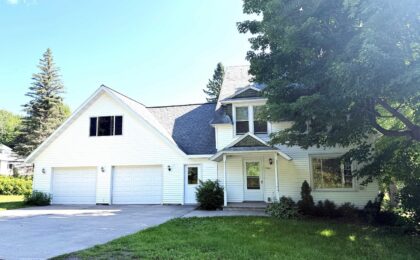
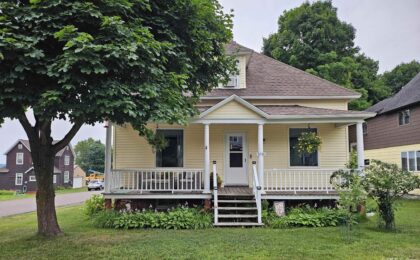
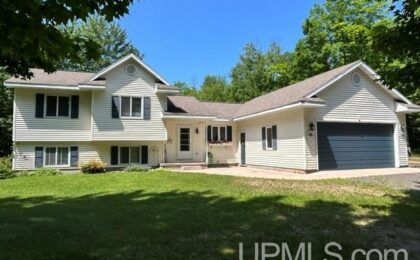
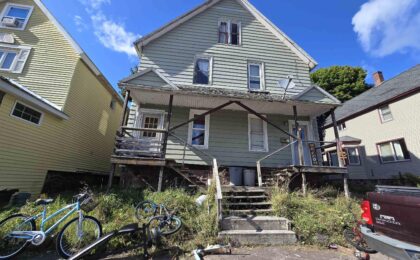
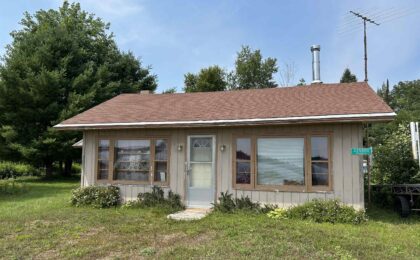
Houghton’s housing stock reads like the town’s history: mining-era homes from the early 1900s in and around downtown, mid-century ranches and newer builds toward the edges and out in the townships, waterfront along Portage Lake and the Portage Canal, and plenty of vacant land beyond that. The thumbnails don’t show you the part that matters most: a lot of this stock is old, and old is where the real due diligence lives. Here’s the honest map:
- Single-family homes: everything from copper-era workers’ houses and Colonial Revivals in town to mid-century ranches and newer construction farther out.
- Multi-family: duplexes and larger converted houses, mostly close to campus.
- Waterfront: Portage Lake and canal frontage carries a premium and doesn’t come up often; the full picture lives in our Upper Peninsula waterfront guide.
- Vacant land: buildable lots near town, wooded 40s in the townships, and bigger tracts up in Keweenaw County; a bigger part of this market than most buyers expect.
- New construction: it happens, mostly outside town where land opens up, more a steady trickle than a wave.
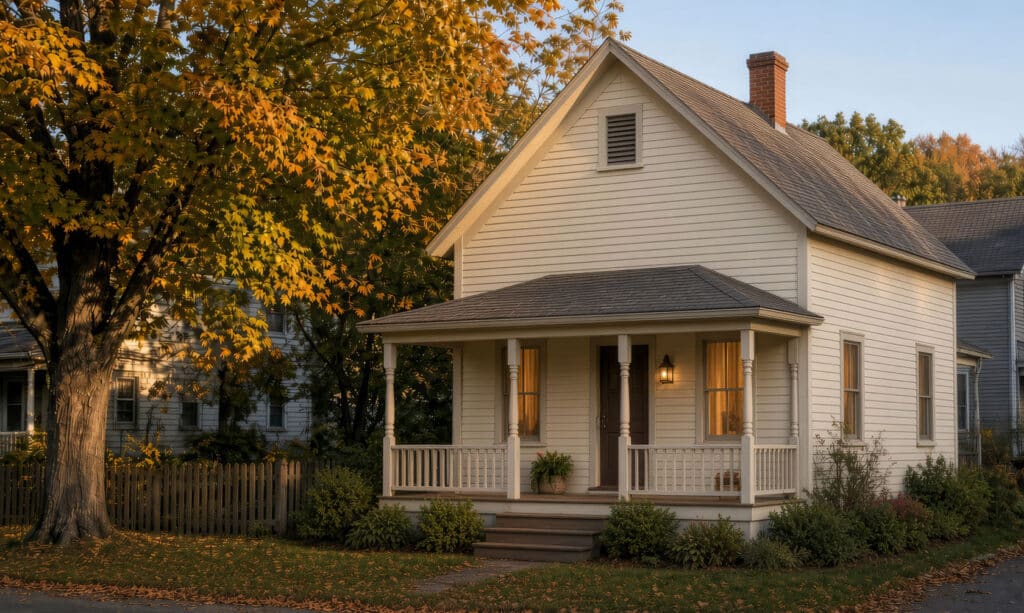
Start with how to read a listing, because the older stock is exactly where the headline number gets slippery. The square footage, or sqft, on a listing sheet generally means finished living space, so a finished basement usually isn’t in that number and unfinished space never is. Two houses that feel the same size can carry very different listed numbers, which is why one of the first things we teach buyers is to ask how the square footage was measured before comparing anything else.
Then there’s the age itself. We point out the good, the bad, and the ugly on any property we show, including our own listings, and on the older homes here the checklist is consistent: the wiring, because knob-and-tube still turns up in pre-war houses; the age and service history of the heating plant; the foundation and basement, since these houses have carried a century of Copper Country winters; and lead paint, where the federal ban came in 1978 but, as Kevin tells buyers, it went out a lot earlier than that. One more item that’s specific to this county: Houghton County sits over old copper workings, so on some parcels, mining history is a legitimate due-diligence question, and the federal National Mine Map Repository holds the records for checking it. That list isn’t meant to scare you off a good house; it’s how you buy one properly.
Vacant land is its own conversation here, and it’s one of the most common deals we do. There’s no house inspection to coordinate and no mortgage complication on most of them, but the questions change: What’s the zoning? What are the taxes? Is there legal access, an easement, or a public road? If hunting land is your route, our Upper Peninsula land guide covers it properly, and we know the answers for most parcels in the four-county area.
How Do You Buy a Houghton Home From Out of State?
The honest answer is that buying from a distance is the normal way it happens here. Most of the buyers we work with are out of area, often hours or a full flight away, in a state you can drive 12 or 13 hours tip to tip. So the question isn’t whether a Houghton deal can be done remotely; it’s who’s running it for you, and our answer is one agent, from your first call to the keys.
There’s no admin layer at State Wide and no handoffs, because there’s nobody to hand off to. As Kevin puts it, “the agent you’re working with is going to be the agent who takes you from your first conversations… through closing and handing you the keys.” The same person shows you the property, in person or through virtual tours, writes the offer, explains every document you’re signing, coaches you through the inspection, and works with the title company and, if there’s a bank involved, the lender. That agent also prepares their own closing worksheet, built so that when it’s all said and done it matches the title company’s and the bank’s exactly.
The distance logistics are ours to carry, and we handle them remotely. Listing sheets in this market call out which utilities serve a property; we verify the parcel details you can’t judge from a screen, and we handle the rest of the paperwork wherever you happen to be. A few terms you’ll meet along the way: earnest money is the deposit that travels with your offer to show you’re serious, title insurance protects your ownership against problems in the property’s past, and the agency disclosure is the document that tells you plainly who the agent represents, which we go over in the very first conversation. As for time, keep two clocks separate. The search takes as long as you need it to take. Once an offer is accepted, a straightforward deal, in Kevin’s experience, takes about 45 days to keys, and some take longer depending on the property and the financing.
One habit tells you most of what you need to know about how we work. At a lot of mortgage closings, the buyer goes into a room to sign while the agents wait outside, and Kevin’s answer to that has always been no.
I’m going in with them. That’s my client, and I’m here to represent them. – Kevin Liimatta, Associate Broker, ABR
It works the same in the other direction, too; we regularly handle the entire sale for out-of-state owners who inherited land or a house in the Copper Country and find that a for-sale-by-owner approach is too difficult to manage from a distance. If your search is starting from three states away, or you’ve got property up here that needs handling, give us a call and let’s talk about what you’re looking for.
Why Work With State Wide of Houghton?
State Wide of Houghton is a small brokerage with decades in this market, and that’s the honest pitch. Kevin Liimatta, Associate Broker, ABR, has spent more than 20 years in Copper Country real estate and has owned the firm since January 2012. Every agent here runs their deals personally, from the first call to the closing table. We’re not the biggest office in the Copper Country, and we don’t claim to be; what you get instead is that nobody hands your deal to an assistant, because we don’t have any.
The work covers the whole map: residential, commercial, and vacant land across Houghton, Keweenaw, Baraga, and Ontonagon counties, so the office that sells you a house in town can handle the 40 you buy later or the storefront after that. Kevin’s line on the roster is simple: “I’ll put my agent up against any other office.” The confidence comes from the model we use: one agent per deal, no handoffs, and decades of local closings behind the answers you get.
You don’t have to take the office’s word for it.
“Kevin is a very professional and experienced realtor. He did a great job of communicating with me throughout the process of selling my real estate and was a pleasure to deal with.” – Rick S.
“Kevin Liimatta sold our house last year with speed, kindness, and professionalism. We felt well taken care of by him and would recommend him to anyone!” – Nancy H.
Some of the best proof runs across years rather than a single deal. A customer that I helped a year or so ago bought vacant land through us, built a spec house on it, and when the house was finished, he listed it with Kevin too, from land purchase to finished-home sale with the same office. The review his wife left afterward came unsolicited; they reached out asking where they could post something, and Kevin pointed them to Google.
And here’s how Kevin asks for reviews in the first place, which tells you as much as the reviews do: “I don’t even say leave me a good review. I say, just leave me an honest review. Good, bad, or indifferent.” That’s the standard around here, on reviews and on everything else.
Houghton Real Estate FAQ
Quick answers to the questions out-of-area buyers ask us most.
Is Now a Good Time to Buy in Houghton?
In a market this small, the honest answer depends more on the property than on the year: waterfront and move-in-ready homes near town draw competition, while some rural parcels and older houses wait for the right buyer. The current numbers live in our Houghton market snapshot, pulled straight from the MLS, so you’re judging by real local data instead of a hunch.
What’s the ZIP Code for Houghton, MI?
The city’s ZIP code is 49931, so addresses and listings read Houghton, MI 49931, and the surrounding towns each carry their own.
What’s the Population of Houghton?
The city of Houghton had a population of 8,386 in the 2020 Census, with 37,361 across Houghton County in the same census. For scale, Michigan Tech’s 7,411 students come close to matching the city’s own headcount.
How Do You Fly Into Houghton?
Houghton County Memorial Airport, code CMX, sits about 4 miles from town and offers daily commercial service to Chicago O’Hare as of 2026. For most out-of-area buyers, that’s one connection between their home airport and a showing.
What About Healthcare?
The area’s hospital is UP Health System Portage in Hancock, directly across the lift bridge from Houghton, and it’s served the region since 1896.
How Long Does Closing Take Here?
Keep two clocks separate: the search takes as long as you need it to take. Once an offer is accepted, a straightforward deal runs about 45 days to keys in Kevin’s experience, and some run longer depending on the property and the financing.
Do I Need a Lawyer to Buy a House in Michigan?
Michigan doesn’t require an attorney to close a home purchase, and around the Copper Country, closings run through title companies. In Kevin’s decades of deals here, a lawyer at the table is rare; as he puts it, “I can’t remember the last deal where there was an attorney at a closing.” If you’d feel better having one review your paperwork, you’re always free to bring one.
Properties